France is generally regarded as a kind of birthplace of motorsport. As early as 1906, France held the first ever "Grand Prix" competition. This race was held annually until 1914 under the patronage of the Automobile Club de France (ACF).
After the end of the First World War, other countries also began holding "Grand Prix" events, and the term "Grand Prix", coined by France, became increasingly popular, quickly gaining acceptance worldwide as a memorable synonym for the emerging international racing scene. After 1918, the Grand Prix of Italy followed (1921); Belgium (1925); Germany and Great Britain, both in (1926).
These events soon attracted large crowds; the racing atmosphere was simply something new and special. There was also no shortage of thrills. Even back then, the motto was …. "see and be seen". People dressed smartly for a trip to the Grand Prix. The ladies wore suits and hats, the gentlemen fine tailoring with suit and tie. The obligatory headwear – a hat or a sporty flat cap – was never missing. Children were brought along in the fashionable sailor suits of the day.
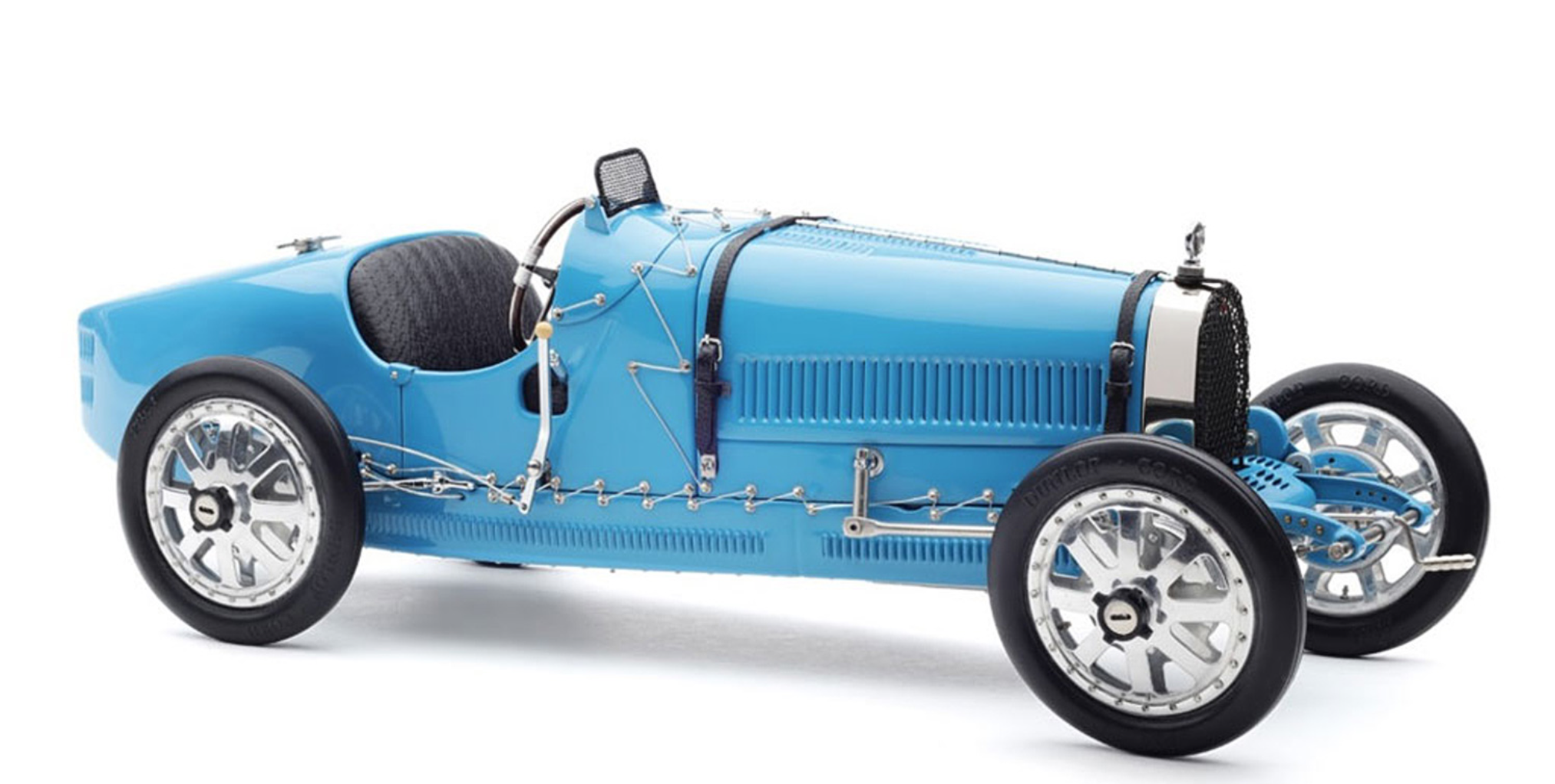
An external, movable gear-shift lever and handbrake lever are integrated into the true-to-scale bodywork. The handbrake lever operates the movable rear-wheel brake bands via steel wire cables. 926 parts, a great deal of expertise and attention to detail were needed to hand-build the Type 35 in this Grand-Prix racing version, that is, without the side-mounted spare wheel, as a miniature work of art - with its now-legendary horseshoe-shaped radiator, cast aluminium spoked wheels and its block-shaped, smooth-surfaced engine.
CHF 390.-