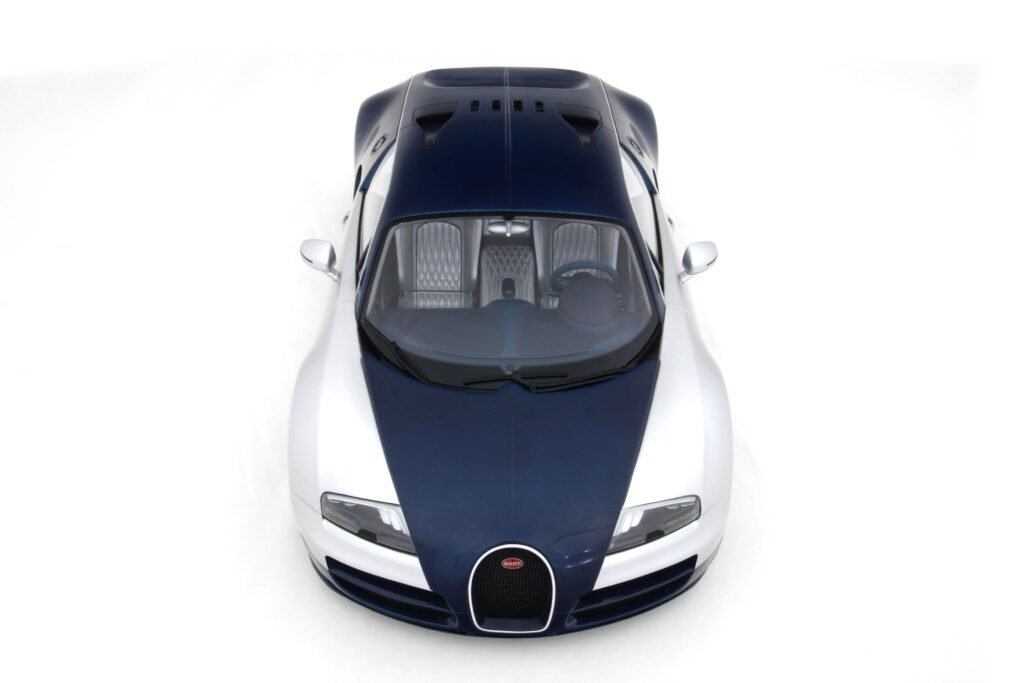
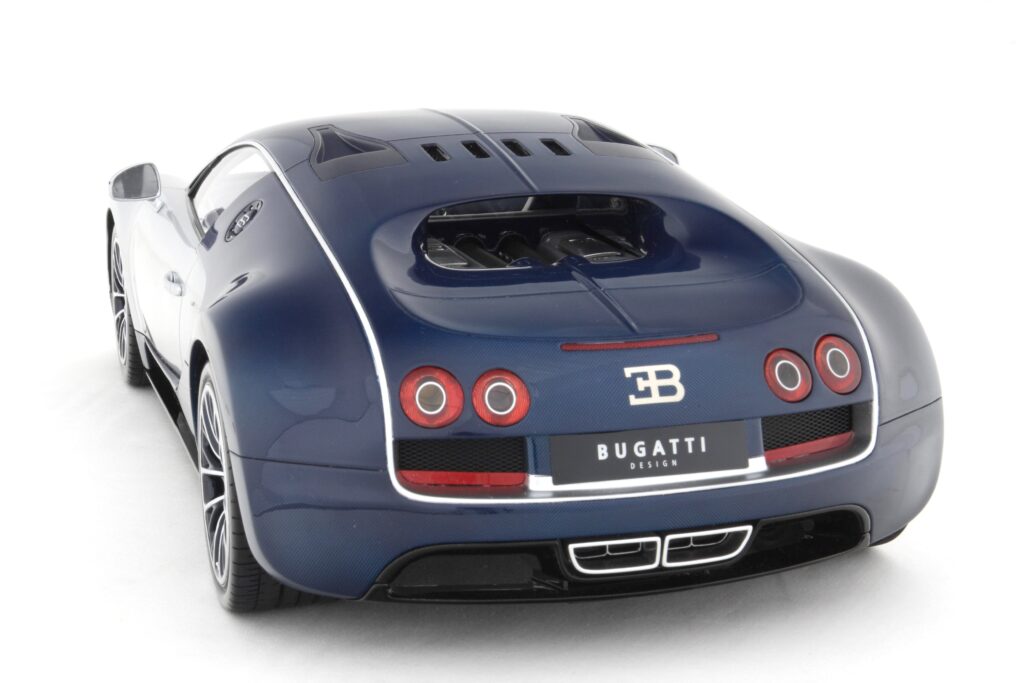
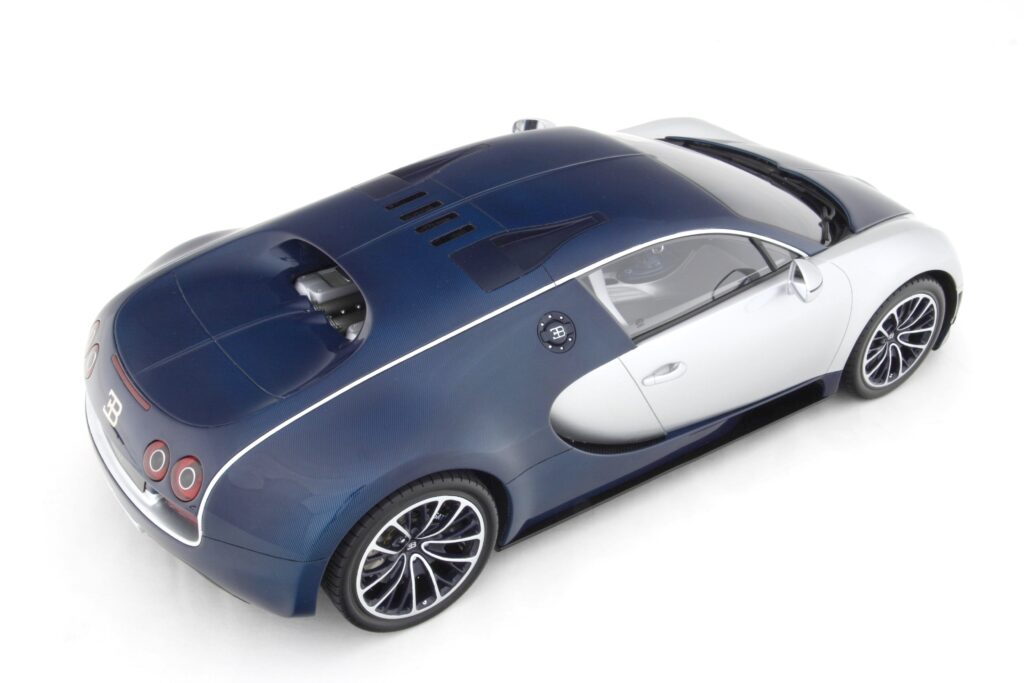
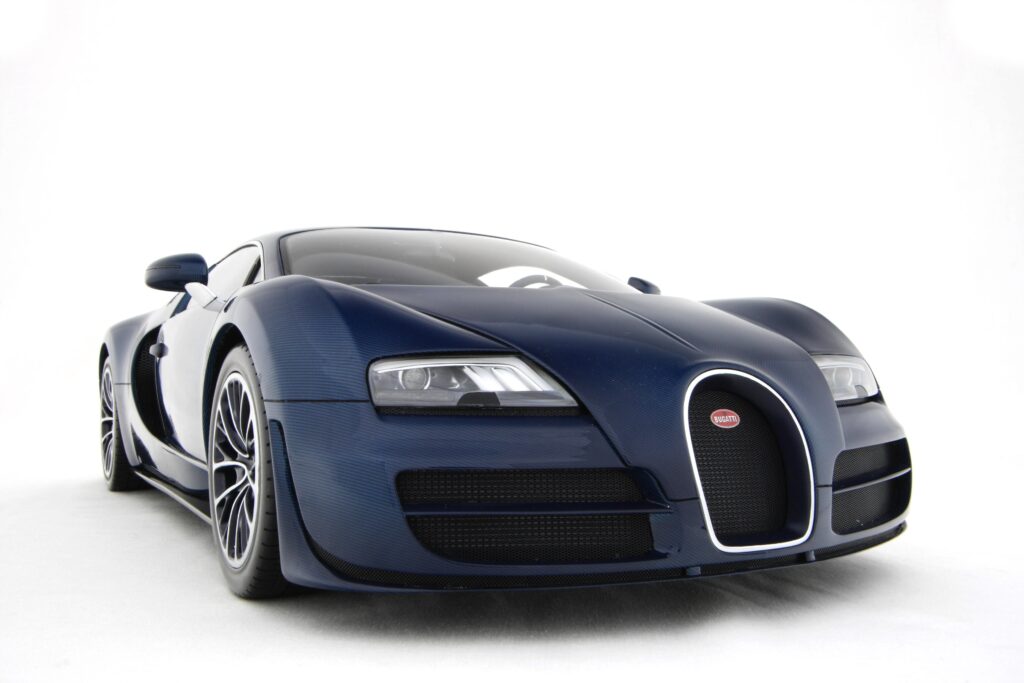
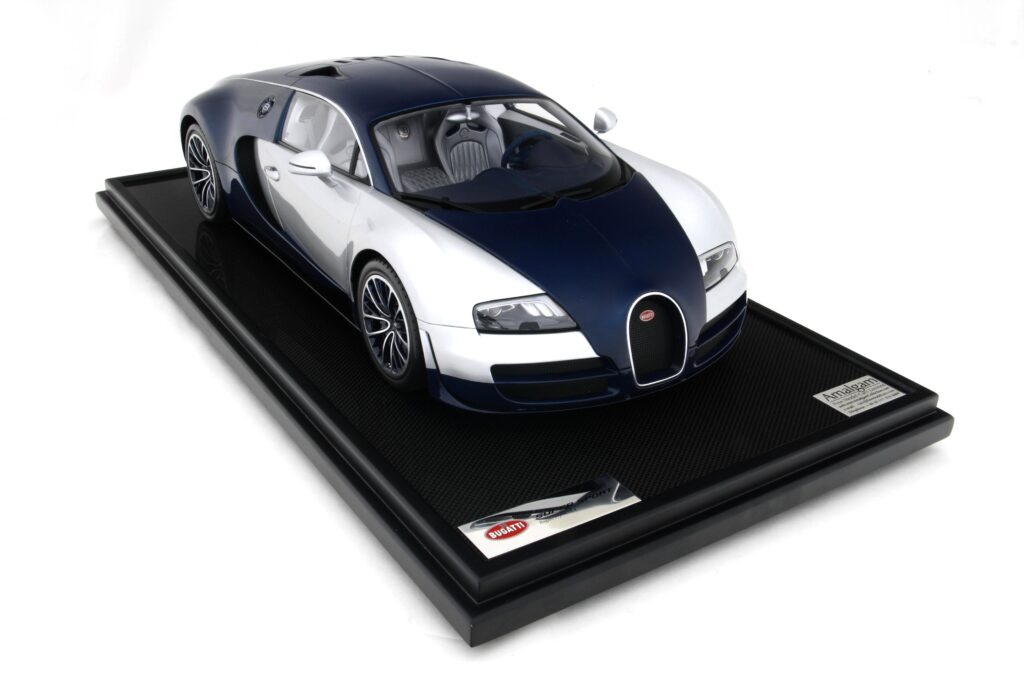
The Bugatti Veyron holds legendary status in the automotive world. Originally a technical experiment for Bugatti, now part of the Volkswagen Group, it changed the automotive landscape forever and gave the Bugatti brand a lasting rejuvenation by turning the supercar into a car that could be driven every day in luxury. Its development is regarded as one of the greatest technological challenges the automotive industry has ever faced. Every single part of the car was developed from scratch, and Bugatti's engineers worked closely with experts from the aerospace industry, a field where materials and systems are routinely subjected to extreme speeds and forces. Although the car set new technological benchmarks, its design remained true to Bugatti's DNA. The two-tone design created the car's characteristic side profile with the signature Bugatti line. The centre line and the horseshoe-shaped radiator grille built a bridge between the early Bugatti models and the present day. Even the name Bugatti Veyron EB 16.4 is a nod to the brand's history: "EB" refers to Bugatti founder Ettore Bugatti, and the car is named in honour of Pierre Veyron, a Bugatti development engineer, test driver and works racing driver who, together with co-driver Jean-Pierre Wimille, won the 24 Hours of Le Mans in 1939 at the wheel of the Type 57C Tank.
In many respects, the Veyron was a car of firsts: the first production car with more than a thousand horsepower, the first with a W16 engine, and the first to break the 250 mph (402km/h) barrier. The car achieved unprecedented figures that only a handful of manufacturers have ever matched. Powered by an eight-litre W16 engine with four turbochargers, producing 1,001 hp and 1,250 Nm of torque, the 1,888 kg Veyron had a power-to-weight ratio of 523 hp per tonne and could accelerate to 100 km/h in 2.5 seconds. This gave it a top speed of 407 km/h, making it the fastest car in the world - a record it would hold for two years. A later variant of the Bugatti reclaimed the record from the SSC Ultimate Aero TT and held it until 2017, a further seven years.
Alongside the engine, Bugatti worked with Michelin to develop the world's first series-produced tyre capable of withstanding speeds of 400 km/h while remaining suitable for everyday use. Together, they developed a new tyre-pressure sensor able to withstand the 130 kg of centrifugal force acting on the wheels at top speed. Carbon-ceramic brake discs were chosen to withstand disc surface temperatures of up to 1,000 degrees. Titanium was also used for the brake disc hub instead of the usual stainless steel, giving the Veyron by far the strongest braking performance in the automotive and motorsport industry at the time. Bugatti regarded the rear wing as the most important technical element. At high speed, the wing could tilt to an angle of up to 55 degrees in less than 0.4 seconds, increasing downforce on the rear axle and thereby improving the distribution of braking force between the front and rear axles. The air brake alone produced deceleration of up to 0.6 G, and combined with the 1.4 G generated by the wheel brakes, the Veyron had more than sufficient braking power.
Not for sale